Do You Brush Infants’ Gums? Baby Teeth Care
Quick Question and Answer
Do infants really need their gums brushed?
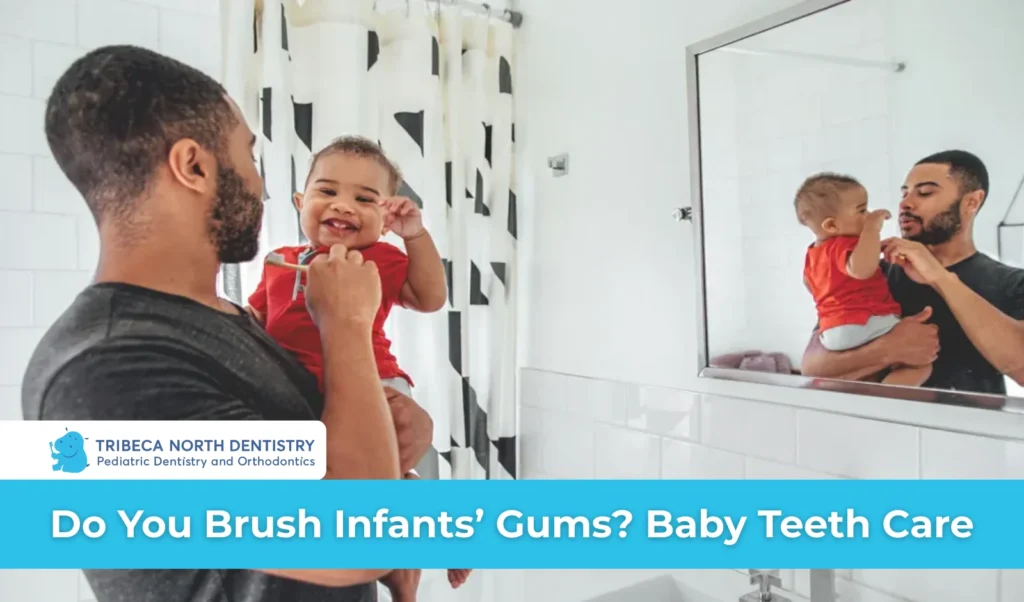
Yes. Even before the first tooth appears, gently cleaning your baby’s mouth is important. Cleaning your baby with a clean, damp cloth or a soft infant brush removes bacteria and helps your child get used to oral care early. This simple routine supports healthy teeth and gums and makes brushing easier later.
Key Takeaways
- Cleaning gums early supports oral health and helps prevent future dental problems.
- A baby’s first tooth usually appears between 6 and 12 months of age, when teething starts.
- Before teeth appear, clean gums only. No toothpaste is needed.
- After a tooth emerges, use a toothbrush with soft bristles and a smear, or rice-grain-sized amount, of fluoride toothpaste.
- A pediatric dentist helps protect primary teeth and support healthy adult teeth and permanent teeth development.
Introduction
Many parents wonder when oral care should begin and whether it matters before teeth appear. The answer is yes. Oral care begins earlier than many expect. Cleaning your baby’s mouth before teeth erupt helps reduce bacteria, lowers the risk of dental caries, and builds familiarity with daily routines during the early years of age.
Primary teeth play an important role in your child’s development. They help children chew, support speech, and guide adult teeth into their proper position later on. When baby teeth are healthy, they create space for permanent teeth to grow correctly. Establishing good habits early supports long-term oral health and reduces dental problems later in life.
The Benefits of Cleaning Gums Early
Cleaning your infant’s gums before teeth erupt offers several benefits. Gentle wiping removes bacteria that can lead to decay once teeth appear. It also helps babies become comfortable with having their mouths cleaned, which makes brushing less stressful later on.
Before the baby’s first tooth appears, parents should clean gums with a clean, damp cloth or a soft silicone brush. Toothpaste is not needed at this stage. This routine prepares your child for brushing once a tooth emerges and supports healthy primary teeth development.
Teething Symptoms Parents Should Watch For
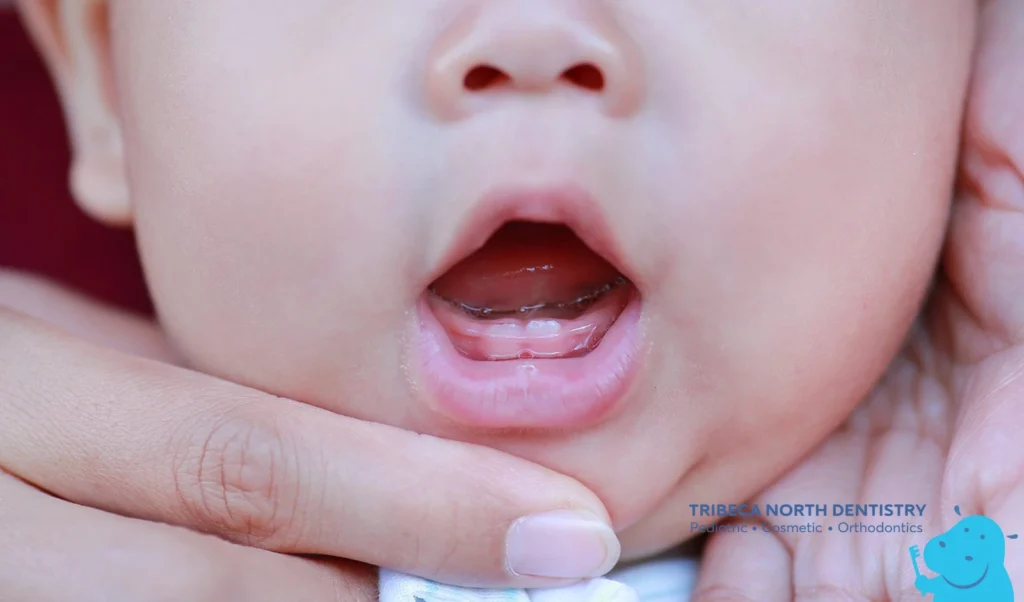
Teething starts at different times for each child, most often between 6 and 12 months, with additional teeth appearing through about 18 months. Some babies experience mild symptoms, while others may show more noticeable changes.
Common teething symptoms include drooling, chewing on objects, irritability, and mild gum swelling. Parents can help ease discomfort by offering safe teething toys, providing comfort, and keeping the baby hydrated. Recognizing these signs helps parents know when teeth are emerging and when to start brushing baby teeth.
Central Incisors: The First Teeth to Appear
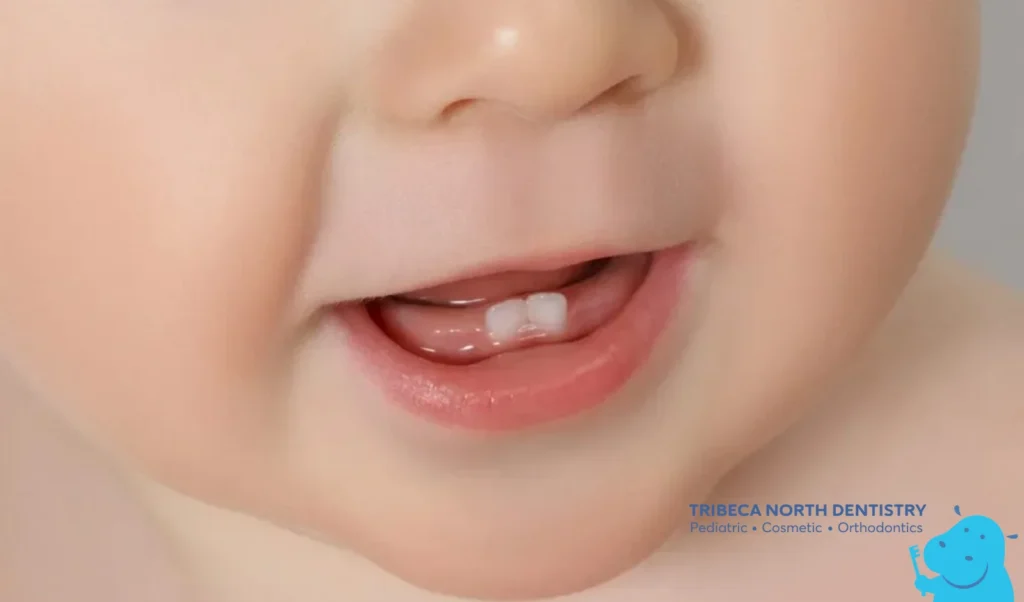
The first teeth to erupt are usually the central incisors, also known as the front teeth on the top and bottom. These teeth typically appear between 6 and 12 months of age and are often the first visible sign of teething.
These primary teeth are important for biting and early speech development. They also guide adult teeth into proper alignment. Keeping the front teeth clean from the start helps prevent decay and supports healthy spacing as your child grows through the early years of age.
How to Brush Baby Teeth Without Tears
Once the baby’s first tooth appears, brushing should begin right away. Use a small toothbrush with soft bristles and a smear, or rice grain sized amount, of fluoride toothpaste. Gently brush all surfaces using small circular motions, including along the gum line.
Brushing can be challenging at first. Singing songs, talking softly, or letting your child briefly hold the toothbrush can help make brushing more enjoyable. Brushing twice a day, in the morning and before bedtime, helps protect primary teeth and build strong oral health habits.
Final Thoughts
Early dental visits and consistent home care lay the foundation for healthy teeth and gums. Healthy baby teeth prevent cavities, support proper adult teeth development, and teach good habits that last a lifetime. Parents who brush gently, follow guidance from a pediatric dentist, and schedule regular dental appointments give children the best start for strong, confident smiles.
Even small mistakes, like skipping surfaces or using too much toothpaste, can affect dental health. Consistent care and advice from a pediatric dentist helps children feel confident while brushing and builds a positive attitude toward long-term oral health.
Keep Your Child’s Smile Healthy
Starting dental care early has lasting benefits. Proper brushing routines, fluoride toothpaste, and regular dentist visits help prevent cavities and other dental problems. Parents who focus on early care support healthy teeth and gums while preparing children for adult teeth.
For guidance on when to take your baby to the dentist and tips for stress-free tooth brushing, schedule an appointment with Tribeca North Dentistry. Our team provides gentle pediatric dental care and helps parents maintain strong oral health at home. Call today to book a consultation at (212) 966-6680.
Frequently Asked Questions
How do I keep my baby’s mouth healthy before teeth appear?
Clean the gums daily with a clean, damp cloth or soft infant brush.
How many teeth should 10 month old have?
Most babies have four to six primary teeth by this age, often starting with the lower front teeth.
When should I start brushing baby teeth?
Begin brushing as soon as a tooth emerges using soft bristles and a smear of fluoride toothpaste.
How can I tell if my baby’s gums are healthy?
Healthy gums are pink, moist, and free from swelling, redness, or bleeding.