

Quick Answer
What can parents do to help children take better care of their teeth?
Building a consistent routine is one of the best ways to support a child’s smile. Help younger children brush properly, introduce flossing when teeth begin touching, limit frequent sweets, and keep up with preventive dental appointments. Simple routines practiced every day can become lasting habits.
Key Takeaways
- Help children brush twice each day
- Introduce flossing when appropriate
- Choose water more often than sweet drinks
- Limit frequent sugary foods
- Make daily routines positive and consistent
- Keep preventive appointments with the dentist
Learning how to improve oral hygiene for kids often starts with small changes at home. Children need time and practice to learn how to care for their mouths, and support from parents can make those routines easier to follow.
Building habits early can help children understand why caring for their teeth and gums matters. As they become more independent, those familiar routines can provide a foundation for lifelong oral health.

Build a Consistent Brushing and Flossing Routine
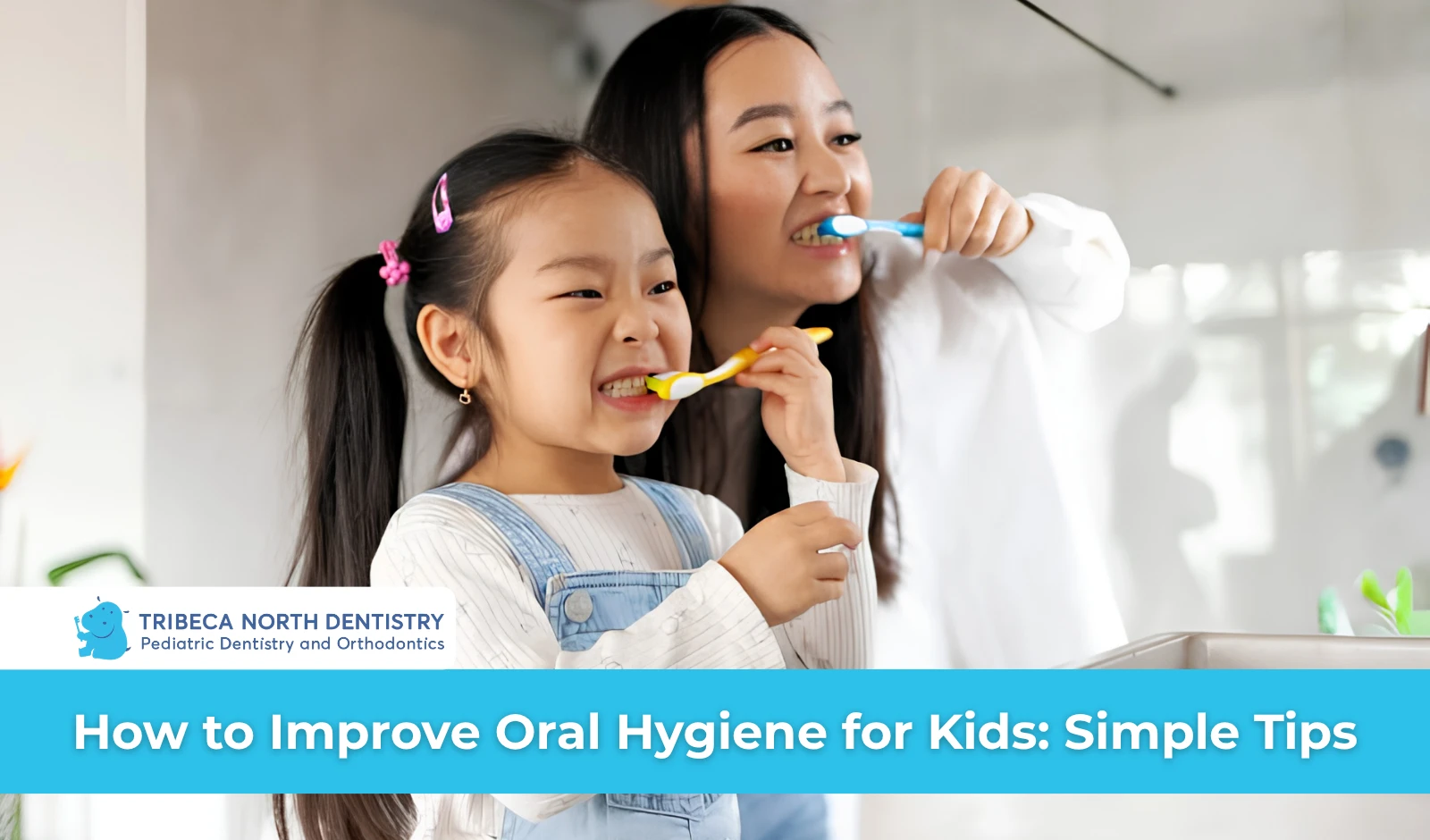
Daily brushing and flossing helps remove plaque and food from areas where bacteria can collect. Younger children usually need help with brushing their teeth until they develop enough coordination to clean every surface thoroughly.
For a consistent routine:
- Brush twice each day
- Clean all tooth surfaces carefully
- Begin flossing when teeth start touching
- Use a pea sized amount of fluoride toothpaste when appropriate
- Supervise younger children while they brush
Parents who are unsure about the correct sized amount of fluoride toothpaste can ask their dental team for guidance based on their child’s age and needs.
Make Daily Brushing Easier for Your Child
Once a routine is established, the next step is making it easier to maintain. Keeping brushing times consistent, such as after breakfast and before bed, can help children know what to expect each day.
Simple ways to make brushing fun include:
- Let your child choose an age-appropriate toothbrush
- Use a two-minute timer or favorite song
- Brush together as a family
- Praise your child for completing the routine
- Keep morning and bedtime routines consistent
Positive encouragement can help daily care feel like a normal part of the day rather than a chore.
Choose Foods and Drinks That Support Healthy Teeth
Daily habits extend beyond brushing. What children eat and drink throughout the day can also affect their mouths. Frequent sugary snacks can expose teeth to repeated acid attacks that contribute to tooth decay and cavities.
To support healthy teeth:
- Offer balanced meals and snacks
- Limit frequent sweets and sugary beverages
- Encourage drinking water throughout the day
- Avoid frequent snacking between meals when possible
Combining thoughtful food choices with consistent home care can help prevent cavities as your child grows.
Keep Up With Preventive Dental Care
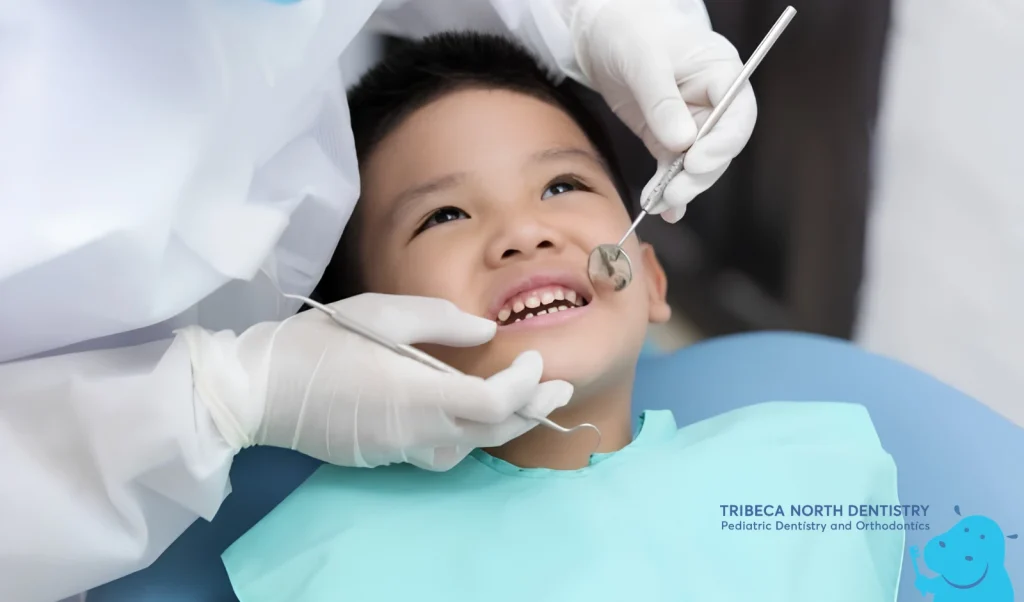
Even a strong home routine should be supported by regular dental appointments. A dental check gives the dentist an opportunity to examine your child’s mouth, monitor development, and identify concerns that may not be obvious at home.
Preventive visits can help with:
- Monitoring developing teeth
- Checking the gums and bite
- Identifying early dental concerns
- Providing professional kids teeth cleaning when appropriate
- Reinforcing healthy habits at home
A routine dental visit also gives parents an opportunity to ask questions and receive guidance based on their child’s individual dental care needs.
Help Your Child Become More Independent
As children grow, they naturally want to take more responsibility for daily tasks. Parents can encourage this independence while continuing to check that the mouth is being cleaned thoroughly.
When considering how to improve oral hygiene in children, focus on progress rather than expecting perfect technique immediately. Continue supervising when needed, offer simple reminders, and gradually allow your child to take a larger role in caring for their smile.
Final Thoughts
Helping children develop good oral hygiene takes consistency, patience, and age-appropriate support. A simple routine at home, smart food choices, and preventive dental appointments can work together to protect a growing smile.
Parents do not have to figure everything out on their own. A child’s dental exam is also an opportunity to ask questions about brushing, flossing, fluoride, diet, and other preventive needs. With steady guidance, children can build routines that support a healthy smile as they grow.
Help Your Child Build Healthier Dental Habits
Good routines today can help support your child’s smile for years to come. At Tribeca North Dentistry, our team can provide preventive care and practical guidance to help families maintain healthy dental habits at home.
Call (212) 966-6680 today to schedule your child’s appointment.
Frequently Asked Questions
When should parents start cleaning a baby’s mouth?
Parents can begin gently cleaning their baby’s gums before the first tooth appears. Once teeth begin erupting, ask your dentist about the appropriate toothbrush and toothpaste for your child’s age.
How long should children brush their teeth?
Children should generally brush for about two minutes. Younger children may need a parent’s help to make sure the front, back, and chewing surfaces are cleaned thoroughly.
When can a child start brushing without help?
There is no exact age that applies to every child. Children need enough coordination and attention to clean all tooth surfaces effectively. Parents should continue supervising until they are confident their child can brush thoroughly.
Should children use an electric or manual toothbrush?
Either can work well. The best choice is one your child can use correctly and comfortably. Your dental team can recommend an age-appropriate option if you are unsure.
What should I do if my child refuses to brush?
Keep the routine calm and consistent. Giving your child simple choices, such as selecting between two toothbrushes or choosing which side to brush first, may help them feel more involved without making brushing optional.
How often should I replace my child’s toothbrush?
A toothbrush is generally replaced every three to four months, or sooner if the bristles become worn or frayed. Your dentist may also recommend replacing it at other times depending on your child’s needs.
Are mouthwashes necessary for children?
Not always. Whether a mouthwash is appropriate depends on the child’s age, ability to rinse without swallowing, and individual dental needs. Ask your dentist before adding one to your child’s routine.