

Quick Answer
How long should you leave gauze on an extraction site?
Gauze is often kept over the extraction area for about 30 to 60 minutes, or for the amount of time your dentist recommends. Bite down with steady pressure to help slow bleeding and allow a blood clot to develop. If the gauze becomes heavily soaked, it may need to be replaced. Follow the specific aftercare instructions provided by your dentist.
Key Takeaways
- Apply firm, steady pressure with clean gauze.
- Replace gauze if it becomes heavily saturated.
- Remove it once active bleeding has decreased.
- Never go to sleep with gauze in your mouth.
- Avoid activities that could disturb the blood clot.
- Call your dentist if bleeding remains heavy.
Knowing how long to keep gauze in after tooth extraction can help you manage bleeding during the first part of recovery. Gauze places pressure over the extraction site while your body begins forming a protective blood clot.
During these early hours, avoid frequently checking or disturbing the area. Giving the clot time to develop and following your dentist’s instructions can support the healing process.
When Should You Change or Remove the Gauze?
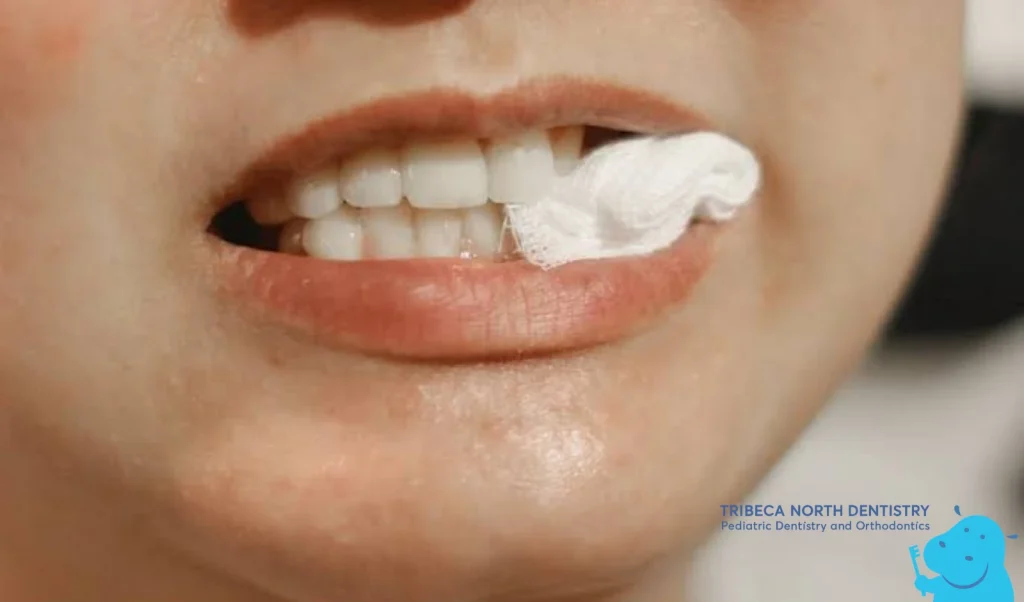
Keep the gauze pad positioned over the extraction area and bite down with steady pressure for as long as your dentist recommends. If it becomes heavily saturated while active bleeding continues, replace it with a clean piece and resume pressure.
Knowing when to stop using gauze after tooth extraction depends mainly on the bleeding. Once active bleeding has slowed to mild oozing and the gauze is no longer becoming saturated, it can generally be removed unless your dentist tells you otherwise. Avoid taking it out repeatedly just to inspect the area, since this can disturb early clot formation.
Why Should You Protect the Blood Clot?
The blood clot covers the extraction site and protects the tissues underneath while healing begins. If it is disturbed or lost too early, recovery may be delayed, and the risk of complications such as dry socket can increase.
During the first 24 hours, avoid forceful spitting or rinsing, drinking through a straw, smoking, or touching the area with your tongue or fingers. These actions may loosen the clot and interfere with healing.
Should You Sleep With Gauze After Tooth Extraction?
No. If you are wondering “Should I sleep with gauze after tooth extraction?”, remove it before falling asleep. Loose gauze can move inside the mouth and create a choking risk.
Before bedtime, make sure significant bleeding has decreased. You can also rest with your head slightly elevated if recommended. If active bleeding continues when you are ready to sleep, contact your dentist for guidance rather than leaving gauze in your mouth overnight.

What Can You Do During the First Day of Recovery?
After the bleeding is under control, your focus should shift toward protecting the healing area and managing normal post-treatment discomfort. Follow the instructions provided for your specific extraction, since recommendations can vary depending on the procedure.
Helpful early recovery steps may include:
- Apply an ice pack as directed for swelling.
- Take recommended or prescribed pain medication as instructed.
- Eat soft foods that require minimal chewing.
- Drink carefully without using a straw.
- Avoid exercise and other strenuous activities.
- Keep your tongue and fingers away from the extraction area.
These precautions can help reduce unnecessary irritation while your mouth begins to recover.
Final Thoughts
Gauze is mainly needed while active bleeding is being controlled. Once bleeding has decreased to mild oozing, you generally do not need to continue using it unless your dentist recommends otherwise.
Continue protecting the blood clot and follow your aftercare instructions as the extraction site heals. Contact your dental team if bleeding does not improve with steady pressure or you have concerns about your recovery.
Get Guidance for a Comfortable Recovery
At Tribeca North Dentistry, our team can provide aftercare guidance based on your extraction and individual needs. If you have concerns about bleeding, discomfort, or healing, call (212) 966-6680 for assistance.
Frequently Asked Questions
Is blood in my saliva normal after a tooth extraction?
Yes. A small amount of blood can mix with saliva during the early stages of recovery. This can make the amount of bleeding look greater than it actually is, but it should gradually decrease.
Can I use tissue or paper towel instead of dental gauze?
It is generally better to use dental gauze. Tissue and paper products can break apart when wet and may leave fibers near the extraction area. Use the material recommended by your dentist whenever possible.
What should I do if I run out of gauze after my extraction?
Contact your dental team if you still have active bleeding and no appropriate gauze available. They can advise you on a suitable alternative and whether the amount of bleeding requires additional attention.
Is it normal for the extraction site to change color while healing?
Yes. The appearance of the extraction area can change as new tissue develops. Contact your dentist if changes in appearance occur with increasing pain, swelling, bleeding, or other concerning symptoms.
Can I brush my teeth after having a tooth extracted?
Yes, but avoid disturbing the extraction site. You can generally clean the rest of your teeth while following your dentist’s instructions for brushing near the healing area.
When can I rinse my mouth after a tooth extraction?
Avoid vigorous rinsing during the initial healing period. Your dentist may recommend gentle rinsing later in recovery based on your procedure and how the extraction area is healing.
How can I tell if my tooth extraction is healing normally?
Continue your usual oral hygiene routine before your appointment. You should also tell your dental team about tooth sensitivity, bleeding gums, changes in your mouth, or other concerns you want them to evaluate.